Introduction
Educational institutions today require energy-efficient, flexible, and low-maintenance HVAC solutions that can provide consistent comfort across classrooms, labs, and administrative spaces. The installation of a 360 HP Variable Refrigerant Flow (VRF) system in a school project represents a modern approach to climate control—balancing performance, energy savings, and scalability.
This school project involves the design and installation of a 360 HP VRF air-conditioning system to cater to diverse functional areas such as classrooms, auditoriums, libraries, computer labs, staff rooms, and administrative offices. The system is designed to deliver precise temperature control, improved indoor air quality, and operational efficiency throughout the campus.
What is a VRF System?
A VRF system is an advanced HVAC technology that uses refrigerant as the cooling and heating medium. It can simultaneously serve multiple indoor units with varying loads by adjusting the flow of refrigerant based on demand, making it ideal for large and multi-zone buildings like schools.
Key Features of the 360 HP VRF Installation :
1. Centralized Outdoor Units with Distributed Indoor Units
Multiple outdoor units connected to various indoor units allow independent temperature control in different rooms and zones.
2. Zoning Flexibility
Each classroom or space can be controlled individually, ensuring comfort based on occupancy and usage patterns.
3. Energy Efficiency
The system uses inverter-driven compressors to modulate capacity, significantly reducing energy consumption compared to conventional systems.
4. Heat Recovery Capability (Optional)
Simultaneous cooling and heating in different zones, enhancing energy utilization (if heat recovery VRF is used).
5. Compact & Space-Saving Design
Minimal ducting and compact indoor units make VRF systems suitable for schools with space constraints.
Design Considerations
- Load Calculation
Accurate cooling load estimation based on occupancy, building orientation, and usage patterns - Ventilation Integration
Provision of fresh air systems to maintain indoor air quality - Acoustic Comfort
Low-noise indoor and outdoor units to maintain a conducive learning environment - Electrical Load Management
Efficient power distribution and backup systems for uninterrupted operation - Piping & Refrigerant Management
Optimized refrigerant piping layout to ensure system efficiency and minimal losses
System Components
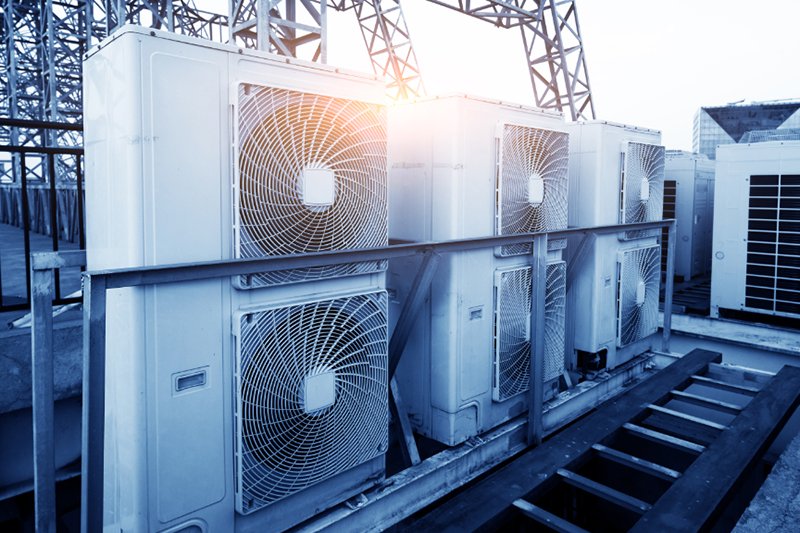
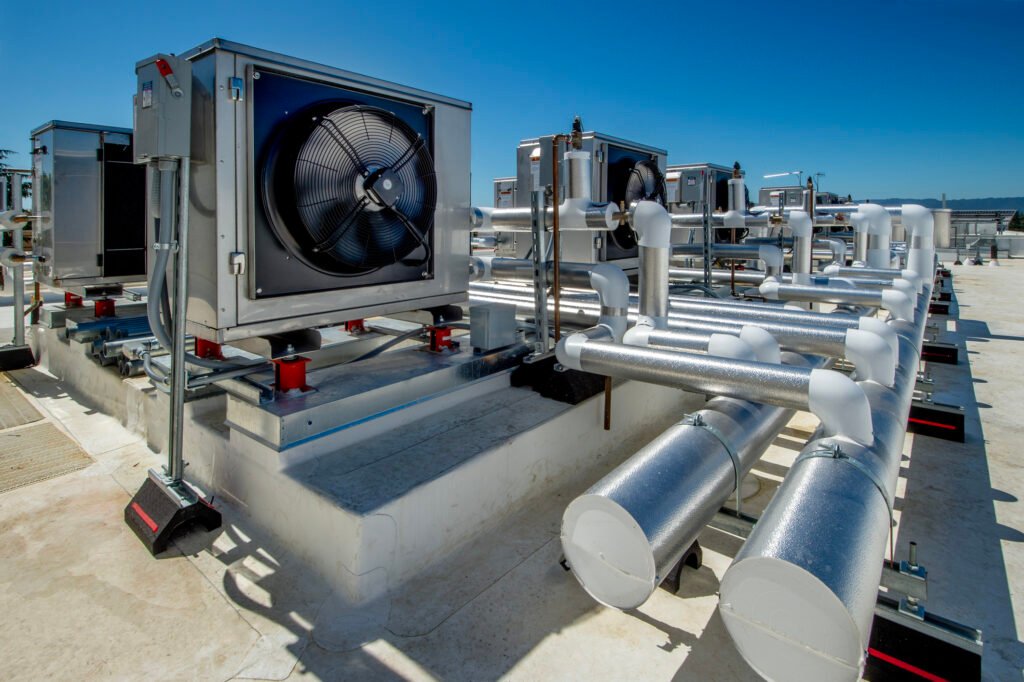
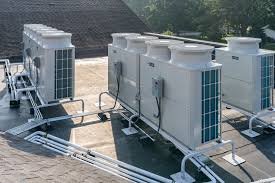
- VRF Outdoor Units (Total Capacity: 360 HP)
- Multiple Indoor Units (cassette, ducted, wall-mounted types)
- Refrigerant Piping Network
- Branch Selector Units (for heat recovery systems)
- Centralized Controller / BMS Integration
- Fresh Air Handling Units (FAHU)
Installation Highlights
- Phased Execution
Installation carried out in stages aligned with construction progress - Quality Assurance
Pressure testing, vacuuming, and refrigerant charging as per standards - System Commissioning
Testing of all indoor units, controls, and performance parameters - Integration with Building Systems
Seamless coordination with electrical, architectural, and fire systems
Benefits for Educational Environment
- Consistent thermal comfort for students and staff
- Reduced operational costs due to energy efficiency
- Improved indoor air quality with proper ventilation
- Flexible usage for different school timings and zones
- Low maintenance and long system lifespan
Sustainability & Efficiency
- Reduced carbon footprint compared to conventional HVAC systems
- Optimized energy usage through inverter technology
- Potential alignment with green building standards
- Smart controls for monitoring and energy management
Challenges & Solutions
- Challenge: Large campus with varying load conditions
Solution: Zoning and modular VRF design - Challenge: Maintaining ventilation along with cooling
Solution: Integration of FAHU systems - Challenge: Installation coordination in active construction site
Solution: Detailed planning and phased execution
Conclusion
The 360 HP VRF system installation in this school project showcases an efficient, scalable, and future-ready HVAC solution tailored for modern educational infrastructure. By combining energy efficiency, flexible control, and advanced technology, the system ensures a comfortable and productive learning environment.